
Top Cloud Infrastructure Automation Platforms for 2026
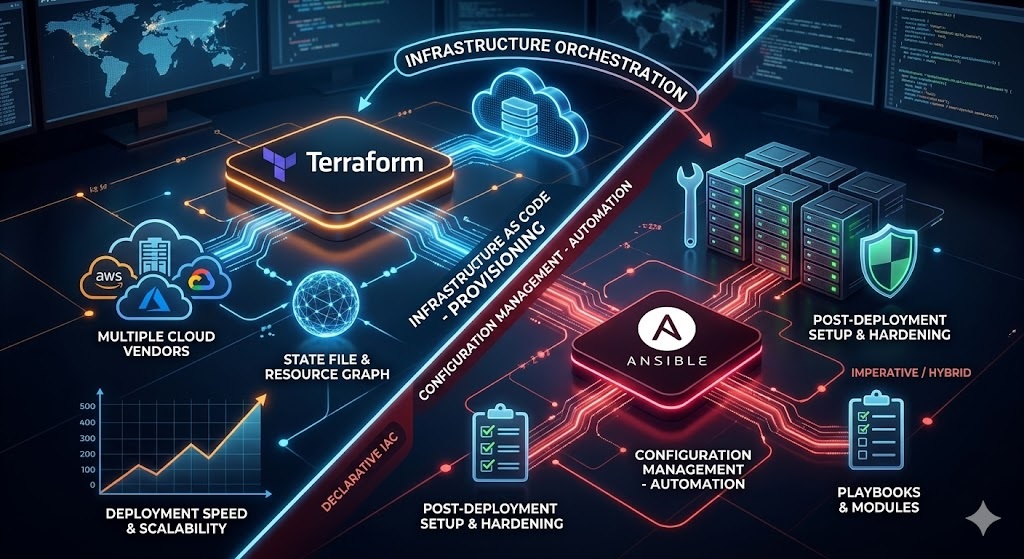

Manually deploying corporate servers, configuring virtual networks, and managing database storage spaces through standard graphical dashboards is a major operational bottleneck for modern enterprise teams. In contemporary cloud engineering environments, operations must scale instantly. This requirement has driven the adoption of Cloud Infrastructure Automation Platforms.
By leveraging Infrastructure as Code (IaC), IT administrators can define complete corporate data networks via software scripts. This practice ensures fast deployments, standardizes environment setups, and eliminates human system configuration errors.
This technical architectural review compares the leading automation platforms, analyzing code deployment speeds, state management systems, and hybrid cloud coordination.
—
Understanding Infrastructure as Code (IaC)
Declarative vs. Imperative Automation
* **Declarative Automation:** You define exactly what the final network layout should look like (e.g., “I need three virtual servers and one secure storage gateway”), and the platform automatically configures the backend resources to match that state.
* **Imperative Automation:** You write specific step-by-step commands that the server engine must execute in sequence to construct your local or remote environments.
Why Multi-Cloud Flexibility Matters
Enterprise architectures rarely rely on a single cloud service provider. True infrastructure automation tools must bridge data environments seamlessly, allowing a single software script to deploy resources across Amazon Web Services (AWS), Microsoft Azure, and Google Cloud Platform (GCP) simultaneously without manual translation layers.
Core Automation Tool Architecture Comparison
| Platform Name | Deployment Approach | Core Infrastructure Focus | Primary Operational Use Case |
| **HashiCorp Terraform** | Declarative IaC | Multi-Cloud Provisioning | Building underlying cloud infrastructure stacks |
| **Red Hat Ansible** | Hybrid / Imperative | Configuration Management | Post-deployment software and application setup |
| **Pulumi** | Native Languages | Developer-Centric IaC | Provisioning cloud resources via Python, Go, or TS |
| **AWS CloudFormation** | Declarative YAML/JSON | Native Amazon Web Services | Deep, optimized automation inside the AWS stack |
Critical Operational Performance Features
1. Robust State File Tracking
When an automation engine modifies a cloud system, it must maintain a secure ledger tracking every single asset’s unique identifier. Premium platforms use advanced state-file management to map your code files directly to your live virtual infrastructure. This state map allows the software to calculate exact changes before deployment, ensuring that updating a minor storage policy won’t accidentally erase a running enterprise web server.
2. Idempotent Execution Paths
A core requirement of enterprise automation software is idempotency. This property ensures that no matter how many times you run a deployment script, the tool will check the live state first and only execute the specific edits required to achieve your target blueprint. If your live network configuration already matches your code, the software makes zero changes, preventing data corruption or duplicate spending on cloud bills.
3. Automated Policy-as-Code Guardrails
Before an automation profile can modify an organization’s master cloud directory, it must pass through automated compliance checks. Advanced platforms integrate security scanners right into the deployment pipeline. If an engineer accidentally includes a script that opens a private server database to the public internet, the policy engine instantly blocks the deployment, maintaining a secure perimeter around corporate data assets.
The Infrastructure Verdict: Choosing Your Automation Hub
* **Deploy Terraform if:** Your team requires a highly stable, multi-vendor engine to orchestrate large-scale cloud infrastructure from a single blueprint code.
* **Deploy Ansible if:** Your focus is on configuring individual software modules, handling application updates, and adjusting operating system settings on existing servers.
* **Deploy Pulumi if:** Your core engineering team consists of traditional software developers who prefer writing infrastructure configurations using standard programming languages rather than specialized configuration syntaxes.
To monitor your automated servers post-deployment or tracking active bandwidth performance spikes on your network switches, read our complete guide on the [Best Enterprise Network Monitoring Software Tools] to secure your core data operations!
Best Enterprise Network Monitoring Software Tools for 2026
Related Blogs
-
 Jun 15, 2026
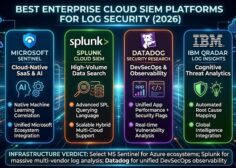
Best Enterprise Cloud SIEM…
In distributed enterprise cloud environments, modern corporate infrastructure platforms generate millions of data logs every single second. Everything from user login attempts and API database..
-
 Jun 13, 2026
Best Enterprise SOAR Platforms…
In contemporary corporate computing environments, enterprise Security Operations Centers (SOCs) face thousands of security alerts every single hour. Manually investigating every software flag, tracking firewall..
-
 Jun 1, 2026
Best Enterprise Database Automation…
As enterprise applications scale globally, managing backend data systems manually becomes an operational liability. Database Administrators (DBAs) can no longer afford to execute raw SQL..
-
 May 30, 2026
Best Enterprise Endpoint Security…
With corporate teams working across distributed hybrid environments, the traditional corporate network perimeter no longer exists. Every laptop, smartphone, and cloud-connected server acts as an..
-
 May 29, 2026
Best Enterprise Network Monitoring…
Maintaining 100% uptime across complex corporate data centers, remote office branches, and cloud storage systems requires continuous visibility into your local infrastructure. IT administrators cannot..
-
May 28, 2026
How to Set Up…
Allowing house guests, clients, or delivery personnel direct access to your primary home or office Wi-Fi network introduces significant security vulnerabilities. When a device logs..